Side Effects
Hair Loss on Mounjaro: Causes and What the Research Says
By Daniel Showman · Updated Jun 6, 2026 · 9 min read
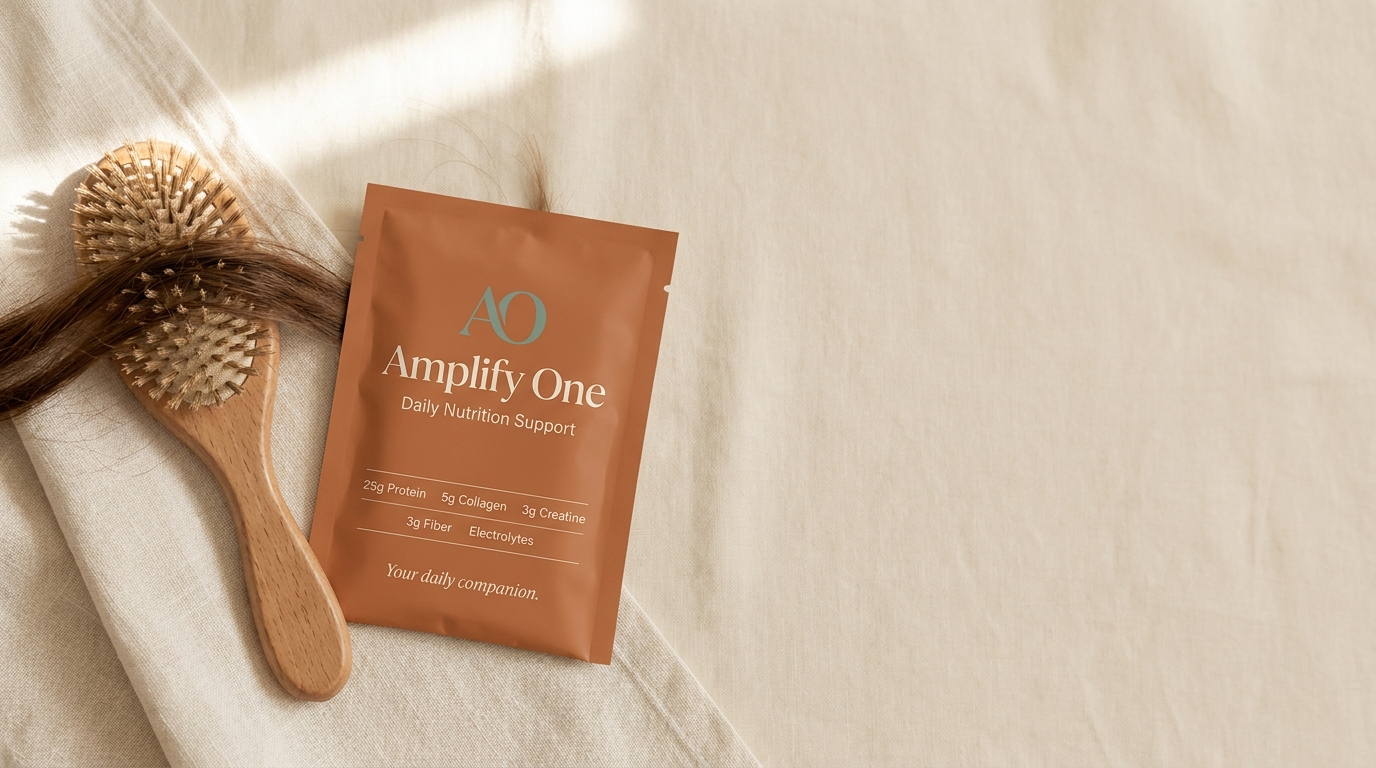
The The first time you notice more hair than usual in the shower drain or your brush, it's unsettling. The second time, it starts to feel like a pattern. By the third or fourth time, you're wondering if your GLP-1 medication is doing something to your hair.
It probably is. But not in the way you think.
Hair shedding on a GLP-1 is one of the most well-documented and most misunderstood side effects of treatment. The medication isn't directly attacking your hair follicles. What's happening is a predictable physiological response to rapid weight loss and reduced nutrient intake. And in most cases, it's reversible.
Here's what the research actually shows and what to do about it.
The Numbers from the Clinical Trials
Hair shedding has been reported in the major GLP-1 clinical trials at notable rates.
The SURMOUNT-1 trial (the pivotal trial for tirzepatide, sold as Mounjaro and Zepbound) reported alopecia (hair loss) in approximately 5.7 percent of participants on the highest dose, compared to about 1 percent in the placebo group (1). For semaglutide (Ozempic and Wegovy), rates in the STEP trials were similar, ranging from 3 to 6 percent depending on dose and population.
These numbers likely underestimate the real-world incidence. Clinical trials measure alopecia using strict definitions and patient-reported outcomes. Many users experience noticeable hair thinning that doesn't rise to the level of "alopecia" but still causes real distress. In online communities (r/Ozempic, r/Wegovy, r/Mounjaro), hair-related posts are among the most common topics raised by users 3 to 6 months into treatment.
So this is real. It's well-documented. And it's almost never permanent.
Why Hair Sheds When You Lose Weight Fast
The mechanism behind GLP-1 hair shedding is called telogen effluvium. It's the same process that causes hair shedding after pregnancy, after major surgery, after severe illness, and during periods of extreme stress.
To understand why it happens, you need to know how hair grows.
Each hair on your head goes through three phases:
- Anagen (growth phase): lasts 2 to 7 years. About 85 to 90 percent of your hairs are in this phase at any time.
- Catagen (transition phase): lasts 2 to 3 weeks. A small percentage of hairs are in this phase.
- Telogen (resting/shedding phase): lasts 3 to 4 months. About 10 to 15 percent of your hairs are in this phase normally.
You shed about 50 to 100 hairs per day under normal conditions because the hairs at the end of their telogen phase are falling out and being replaced by new anagen-phase hairs.
In telogen effluvium, something disrupts the normal cycle. A larger-than-usual percentage of your anagen-phase hairs get pushed prematurely into the telogen phase. Three or four months later, those hairs reach the end of their telogen cycle and shed all at once. Suddenly you're losing 200 to 400 hairs per day instead of 50 to 100.
The triggers that cause this shift in GLP-1 users:
1. Rapid weight loss. When your body loses weight quickly (typically more than 1 to 2 pounds per week sustained over time), it perceives this as a metabolic stress signal. Non-essential processes (like maintaining full hair density) get deprioritized in favor of essential ones (organ function, immune response).
2. Reduced protein intake. Hair is roughly 95 percent keratin, a structural protein. When dietary protein drops, hair growth is one of the first systems your body slows down because hair is biologically non-essential.
3. Micronutrient deficits. Several specific nutrients are directly involved in hair growth: iron, zinc, biotin, vitamin D, B12, and folate. When food intake drops, all of these typically drop too.
4. Stress hormones. Significant body composition change increases cortisol production in many people. Elevated cortisol contributes to telogen effluvium independently of the nutritional factors.
This combination of factors pushes hair follicles from anagen into telogen at higher-than-normal rates. Three to four months after starting the medication, you start noticing the shed.
The Timeline
Understanding the timeline helps a lot, because it explains why hair shedding doesn't start immediately and why it's likely to resolve.
Months 0 to 2: You start the medication and lose weight. No visible hair changes yet. Behind the scenes, hair follicles are starting to shift from anagen to telogen at higher rates.
Months 2 to 4: Hair shedding begins to become noticeable. You see more hair on your pillow, in your brush, in the shower drain. Your part may look slightly wider or your ponytail may feel thinner.
Months 4 to 6: Peak shedding for most people. This is when most users feel the most alarmed.
Months 6 to 9: Shedding slows and stops. New hair regrowth begins (you may see short "baby hairs" along your hairline).
Months 9 to 18: Hair density returns to baseline as new hair grows in and matures.
This timeline assumes your nutrition is being supported during the shedding phase. If the underlying gaps aren't corrected, the shedding can continue longer.
The Nutrients That Support Hair Health
Several nutrients are directly involved in hair growth and have research support for hair health. For GLP-1 users specifically, four stand out.
Protein
Hair is keratin, and keratin is protein. Without adequate protein intake, hair growth simply slows down regardless of every other factor.
Research published in Advances in Nutrition recommends 1.2 to 1.6 grams of protein per kilogram of body weight per day during meaningful weight loss to preserve lean mass and support tissue maintenance (2). This same protein target supports hair growth.
For a 200-pound adult on a GLP-1, that's 100 to 145 grams of protein daily. Most GLP-1 users eat about half that much without supplementation.
Iron
Iron deficiency is one of the most common nutritional causes of hair loss, particularly in women. The American Academy of Dermatology recognizes iron deficiency as a well-established trigger for telogen effluvium (3).
When food intake drops on a GLP-1, iron intake often drops too. Red meat, dark poultry, and fortified grains are major dietary iron sources, and all of these are commonly under-consumed when appetite is suppressed.
If your hair shedding persists past 6 months, ask your doctor for a ferritin test (the storage form of iron). Normal ferritin is typically 30 to 300 ng/mL, but research suggests ferritin levels above 70 ng/mL are needed for optimal hair growth. Many people show normal hemoglobin (no anemia) while having low ferritin (suboptimal iron stores for hair).
Methylated B-Vitamins
B-vitamins, particularly biotin (B7), B12, and folate, play direct roles in hair growth and follicle health.
Why methylated forms matter: Research suggests up to 30 percent of the population has variants of the MTHFR gene that reduce conversion of synthetic B-vitamins into active forms (4). For these people, taking methylated B-vitamins (methylcobalamin for B12, P-5-P for B6, 5-MTHF for folate) bypasses the conversion step entirely.
For hair health specifically:
- Biotin: typically not deficient in most people, but supplementation may help when other B-vitamins are low
- B12 (methylcobalamin): critical for cell division (hair follicles are among the fastest-dividing cells in your body)
- Folate (5-MTHF): required for DNA synthesis in growing hair cells
A high-quality methylated B-complex provides all of these in active forms.
Zinc
Zinc is involved in protein synthesis and cell division, both of which are critical for hair growth. Zinc deficiency is associated with hair loss in clinical studies, and supplementation has shown benefits in some hair loss patient populations.
Adult RDA is 8 to 11 mg per day. Most adults get enough at baseline, but on a GLP-1 with reduced food intake (especially red meat and shellfish, the richest dietary sources), zinc intake can fall below adequate levels.
Targeting 8 to 15 mg of zinc daily from food and supplementation is reasonable. Avoid high doses (above 40 mg daily) long-term, as excessive zinc can interfere with copper absorption.
How Long Until It Stops?
For most GLP-1 users, hair shedding follows a predictable pattern:
- Onset: 2 to 4 months after starting medication
- Peak shedding: Months 4 to 6
- Shedding stops: Months 6 to 9
- Visible regrowth: Months 6 to 12
- Full restoration: Months 12 to 18
This assumes you're correcting the nutritional gaps during the shedding phase. If you're not, the timeline extends.
If your shedding hasn't slowed by month 9, talk to your prescribing clinician about:
- Ferritin and iron panel
- TSH and thyroid panel (rapid weight loss can affect thyroid function)
- Vitamin D level
- Zinc level
- Complete metabolic panel
These tests will reveal whether something beyond standard nutrition support is going on.
The fix isn't a mystery. It's just inconvenient. Hit your protein. Replace your electrolytes. Take active form B-vitamins. Add creatine. Get enough fiber. Every single day.
What Doesn't Help (Even Though It's Heavily Marketed)
The hair loss supplement industry is enormous and most of it isn't supported by strong evidence for GLP-1-induced telogen effluvium specifically.
Biotin megadoses (5,000 to 10,000 mcg daily). The standard adult RDA is 30 mcg. Most "hair, skin, and nails" supplements contain biotin at 100 to 300 times that amount. There's no evidence these megadoses help unless you have a clinical biotin deficiency, which is rare. High-dose biotin can also interfere with thyroid lab tests, so it's worth being cautious.
Hair growth shampoos. External products can support hair shaft strength and scalp health, but they don't address the underlying nutritional cause of telogen effluvium.
Most "hair vitamins." Most of these are biotin-heavy with minimal evidence behind the other ingredients. If you're taking a high-quality methylated B-complex and getting adequate protein, iron, and zinc, you're already getting what matters.
Minoxidil (Rogaine). This is effective for androgenetic alopecia (genetic male/female pattern baldness), but it's not specifically indicated for telogen effluvium. Talk to a dermatologist before starting it for GLP-1-related shedding.
What Actually Helps
The interventions that have research support for hair health during GLP-1 treatment:
- Adequate daily protein (1.2 to 1.6 g/kg body weight)
- Iron sufficiency (confirmed by ferritin test if shedding persists)
- Methylated B-vitamins at standard daily doses
- Zinc sufficiency (8 to 15 mg daily)
- Reasonable weight loss pace (1 to 2 pounds per week sustained, not faster)
- Stress management (cortisol elevation worsens telogen effluvium)
- Patience (the timeline is months, not weeks)
Most of these are addressed by the same supplementation strategy that protects against muscle loss and fatigue. Hair health doesn't require a separate stack — it benefits from the same nutritional foundation.
This is part of why we built Amplify One the way we did. The protein, methylated B-vitamins, and minerals in every sachet directly support hair health alongside the muscle preservation and energy benefits.
When to See a Doctor
Most cases of GLP-1 hair shedding resolve with nutrition support and time. But some situations warrant medical attention:
- Patchy hair loss (not generalized thinning) — could indicate alopecia areata or other conditions
- Hair loss with scalp pain, redness, or itching — could indicate inflammation or infection
- Eyebrow or eyelash loss alongside scalp shedding — could indicate thyroid issues
- Shedding that doesn't slow after 9 to 12 months of consistent nutrition support
- Family history of female or male pattern baldness combined with sudden onset — your GLP-1 may have unmasked an underlying tendency
A dermatologist can perform a "pull test" to assess shedding severity and order appropriate lab work.
The Bottom Line
Hair shedding on a GLP-1 is well-documented, biologically predictable, and almost always reversible.
The mechanism is telogen effluvium, triggered by rapid weight loss, reduced protein intake, and micronutrient deficits. The timeline is months, not weeks. Most users experience peak shedding around months 4 to 6 and full regrowth within 12 to 18 months.
The interventions that work:
- Adequate daily protein (1.2 to 1.6 g/kg body weight)
- Iron sufficiency (ferritin above 70 ng/mL ideally)
- Methylated B-vitamins at standard daily doses
- Zinc sufficiency
- A reasonable pace of weight loss (1 to 2 pounds per week)
If you're 4 to 6 months in and watching the shed peak, the most important thing to do is correct your nutrition foundation and give the regrowth time. Hair grows back. The follicle isn't damaged, just on a temporary pause.
This is one of the most distressing GLP-1 side effects to experience. It's also one of the most solvable.
Frequently Asked Questions
Sources
- Jastreboff AM, Aronne LJ, Ahmad NN, et al. "Tirzepatide Once Weekly for the Treatment of Obesity." New England Journal of Medicine. 2022;387(3):205-216.
- Cava E, Yeat NC, Mittendorfer B. "Preserving Healthy Muscle during Weight Loss." Advances in Nutrition. 2017;8(3):511-519.
- American Academy of Dermatology Association. "Hair Loss: Diagnosis and Treatment."
- Moll S, Varga EA. "Homocysteine and MTHFR Mutations." Circulation. 2015;132(1):e6-e9.
Daniel Showman
Founder of Amplify One. Writing about GLP-1 nutrition from the research, and from experience.
More articles →