Research
How Much Muscle Do You Lose on Ozempic? The Research Explained
By Daniel Showman · Updated Jun 6, 2026 · 9 min read
If you're on a GLP-1 medication and you've noticed your strength dropping, your hair shedding, or your energy crashing — the research has an explanation. And it's not what your doctor probably told you.
Up to 45% of the weight people lose on semaglutide is not fat. It's lean mass. That includes muscle, bone, organ tissue, and water. Published in the New England Journal of Medicine. Confirmed by multiple peer-reviewed reviews since.
This article walks through exactly what the research shows, why it happens, and what the evidence says you can actually do about it.
What the Research Actually Shows
The most cited study on this question is the STEP-1 trial, published in the New England Journal of Medicine in 2021 (1). It tracked 1,961 adults with obesity who took once-weekly semaglutide (the active ingredient in Ozempic and Wegovy) for 68 weeks. Participants lost an average of 15.3 kg (about 33.7 pounds) of total body weight.
But when researchers measured body composition with DEXA scans, they found something the headlines mostly ignored. Of that 15.3 kg lost, 6.92 kg was lean mass (1). That's roughly 45% of the total weight loss coming from lean tissue, not fat.
A 2024 review in Diabetes, Obesity and Metabolism analyzed the broader literature and confirmed the pattern: across multiple semaglutide trials, lean mass loss accounted for up to 40% of total weight loss (2). For liraglutide (Saxenda, an older GLP-1 medication), that number rose as high as 60% (2).
A 2024 Circulation review framed the same data more starkly, asking whether the muscle loss seen with GLP-1 medications represents an "adaptive or maladaptive response" (3). The reviewers concluded that while some lean mass loss is normal during any significant weight loss, the magnitude observed in GLP-1 trials exceeded what would be predicted by the "quarter fat-free mass rule" that typically governs voluntary calorie-restriction weight loss (3).
In other words: people on GLP-1 medications appear to lose more muscle, faster, than people losing the same amount of weight through diet and exercise alone.
The STEP-1 Trial: What 1,961 Participants Revealed
The STEP-1 trial is worth understanding in detail because it's the foundation of nearly every conversation about GLP-1 muscle loss.
Participants were adults with a BMI of 30 or higher (or 27+ with a weight-related comorbidity like hypertension or sleep apnea). They received weekly injections of 2.4 mg semaglutide or placebo, alongside lifestyle counseling, for 68 weeks.
By the end of the trial, here's what the body composition data showed for the semaglutide group (1):
- Total body weight: down 15.3 kg
- Fat mass: down 8.36 kg
- Lean body mass: down 6.92 kg (or 13.2% of starting lean mass)
The placebo group, by comparison, lost only 1.37 kg of fat mass and 1.83 kg of lean mass — small changes consistent with normal weight fluctuation over 68 weeks.
What jumps out: in the semaglutide group, lean mass loss was nearly as large as fat mass loss. The body composition shift was favorable in absolute terms (more fat than muscle was lost), but the proportional loss of lean tissue was significantly greater than what researchers would predict from voluntary calorie restriction alone (3).
Why Your Body Burns Muscle When You Eat Less
To understand why this happens, you need to understand what GLP-1 medications actually do.
GLP-1 receptor agonists work primarily by suppressing appetite. They slow gastric emptying, increase satiety, and reduce hunger signals from the brain. Most patients on Ozempic, Wegovy, Mounjaro, or Zepbound experience a dramatic drop in food intake — often 30% to 40% less than baseline.
That's how the weight comes off. Less food in equals less energy in. The body makes up the deficit by burning stored energy. Some of that comes from fat. But a meaningful portion comes from lean tissue, particularly muscle.
Here's why.
Protein needs go up during weight loss, not down. A 2017 review in Advances in Nutrition concluded that during meaningful weight loss, daily protein requirements rise to between 1.2 and 1.6 grams per kilogram of body weight to preserve lean mass (4). For a 200-pound person, that's roughly 110 to 145 grams of protein per day.
The average American eats about 88 grams of protein per day at baseline. When appetite drops by 30% on a GLP-1, that intake often falls to 50-60 grams. So at the exact moment your body needs more protein to defend against muscle loss, you're eating significantly less.
Resistance training drops too. Many GLP-1 users report dramatic drops in energy and exercise tolerance. Strength training sessions get shorter, lighter, or skipped entirely. Without the mechanical stimulus of resistance training, muscle protein synthesis slows down.
Micronutrients matter more than people realize. Lean tissue maintenance requires adequate B12, B6, folate, magnesium, and other co-factors. Eating less food means getting less of all of these. Methylated forms (the active versions your body actually uses) are particularly important because they bypass a conversion step that not everyone does well (5).
Put it together: appetite suppression leads to lower protein intake, lower micronutrient intake, reduced training stimulus, and the body responds by catabolizing the tissue that's most metabolically expensive to maintain — muscle.
How to Protect Lean Mass on a GLP-1
The good news: nearly every researcher who has studied this problem has reached the same conclusion. Lean mass loss on GLP-1 medications is largely preventable with the right interventions.
Three evidence-based strategies stand out.
1. Hit Your Daily Protein Target
This is the single highest-leverage intervention. The 1.2 to 1.6 g/kg recommendation from the Advances in Nutrition review is well-supported across multiple weight-loss studies (4). For most adults on a GLP-1, that translates to roughly 100-150 grams of protein per day.
The challenge is doing it with a suppressed appetite. Whole-food protein sources fill you up fast, which is the opposite of what you need. This is where a high-quality protein supplement becomes practical — concentrated protein in a small volume hits your target without forcing you to eat more food than you can stomach.
Whey protein isolate is particularly well-supported. It's fast-absorbing, highly bioavailable, and has the most research behind it for muscle preservation in calorie deficit (4).
2. Resistance Train at Least Twice Per Week
Multiple studies show that resistance training is the single most protective intervention against lean mass loss during any calorie deficit, including GLP-1-induced deficits (6). You don't need to train like a bodybuilder. Two sessions per week of basic compound movements (squats, presses, rows, hinges) is enough to maintain a meaningful mechanical stimulus.
If energy is a problem, even 20-minute sessions at moderate intensity will outperform no training at all.
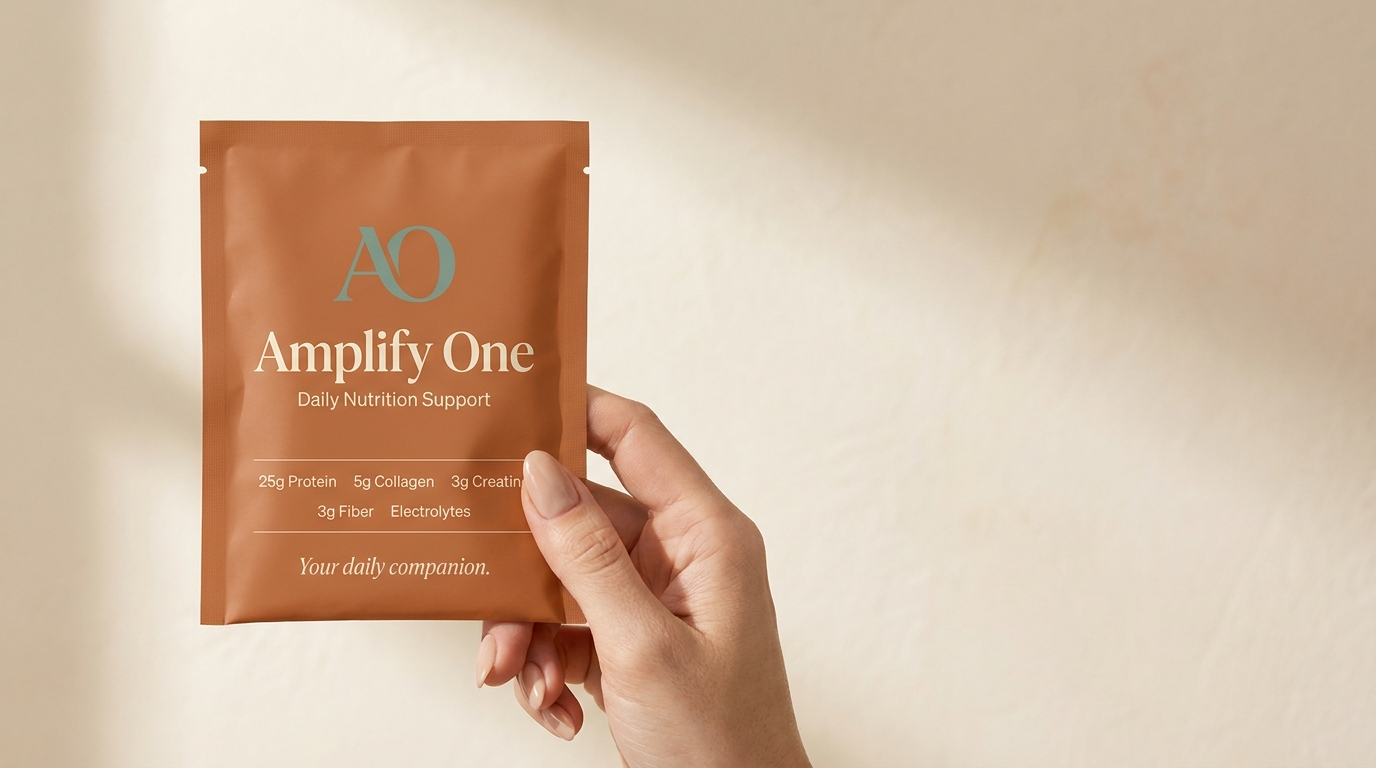
3. Supplement Creatine, Electrolytes, and Methylated B-Vitamins
Creatine monohydrate at 3 to 5 grams per day is one of the most-studied supplements in nutrition. The International Society of Sports Nutrition's official position is that creatine supplementation is "the most effective ergogenic nutritional supplement currently available" (7). Multiple trials show it preserves strength and lean mass during calorie deficits (7).
Electrolytes matter because GLP-1 users frequently develop sodium, potassium, and magnesium deficits. Lower food intake means lower mineral intake. Cramps, headaches, and fatigue often trace back to this (8).
Methylated B-vitamins (methylcobalamin for B12, P-5-P for B6, 5-MTHF for folate) skip a conversion step that some people, particularly those with MTHFR gene variants, don't perform well (5). These vitamins are critical for energy metabolism and red blood cell production — both of which take a hit when food intake drops.
The fix isn't a mystery. It's just inconvenient. Hit your protein. Replace your electrolytes. Take active form B-vitamins. Add creatine. Get enough fiber. Every single day.
What About Tirzepatide?
Tirzepatide (sold as Mounjaro and Zepbound) is a dual GLP-1/GIP agonist with a slightly different mechanism than semaglutide. Early data suggests it may cause less lean mass loss.
The SURMOUNT-1 trial showed that participants on the highest dose of tirzepatide lost an average of 22.1 kg of body weight, with 5.67 kg coming from lean mass — about 25.7% of total weight loss (2). That's significantly better than the 45% seen with semaglutide in STEP-1.
Why the difference? Researchers aren't entirely sure, but tirzepatide's additional GIP agonism may have favorable effects on muscle metabolism that semaglutide alone doesn't replicate.
This is encouraging, but it doesn't mean tirzepatide users are off the hook. A 26% lean mass loss on a 22 kg weight reduction is still meaningful muscle loss. The same protein-training-supplementation strategies still apply.
Why Doctors Don't Talk About This More
A reasonable question: if this is so well-documented in the research, why isn't every prescribing physician walking patients through it?
A few reasons.
First, body composition is rarely measured in clinical practice. Without DEXA or InBody scans, all your doctor sees is the number on the scale. Total weight loss looks like a win even when lean mass is dropping.
Second, the research is recent. The STEP-1 trial was published in 2021. The follow-on reviews started appearing in 2023 and 2024. Many primary care physicians prescribing these medications haven't read the body composition data yet.
Third, primary care visits are short. Even a doctor who knows about the muscle loss issue often doesn't have time to walk patients through protein targets, resistance training programming, and supplementation strategies.
The result: most patients learn about this problem the hard way. They notice their strength dropping, their hair shedding, or their energy crashing months into treatment, and then they go looking for answers.
Frequently Asked Questions
Sources
- Wilding JPH, Batterham RL, Calanna S, et al. "Once-Weekly Semaglutide in Adults with Overweight or Obesity." New England Journal of Medicine. 2021;384(11):989-1002.
- Neeland IJ, Linge J, Birkenfeld AL. "Changes in lean body mass with glucagon-like peptide-1-based therapies and mitigation strategies." Diabetes, Obesity and Metabolism. 2024.
- Conte C, Hall KD, Klein S. "Muscle Mass and Glucagon-Like Peptide-1 Receptor Agonists: Adaptive or Maladaptive Response to Weight Loss?" Circulation. 2024.
- Cava E, Yeat NC, Mittendorfer B. "Preserving Healthy Muscle during Weight Loss." Advances in Nutrition. 2017;8(3):511-519.
- National Institutes of Health Office of Dietary Supplements. "Vitamin B12 Fact Sheet for Health Professionals."
- Cadegiani FA. "Why you should not skip tailored exercise interventions when using incretin mimetics for weight loss." 2024.
- Kreider RB, Kalman DS, Antonio J, et al. "International Society of Sports Nutrition position stand: safety and efficacy of creatine supplementation." Journal of the International Society of Sports Nutrition. 2017;14:18.
- National Institutes of Health Office of Dietary Supplements. "Magnesium Fact Sheet for Health Professionals."
Daniel Showman
Founder of Amplify One. Writing about GLP-1 nutrition from the research, and from experience.
More articles →