Nutrition
What to Eat on a GLP-1: A Daily Nutrition Guide
By Daniel Showman · Updated Jun 6, 2026 · 10 min read
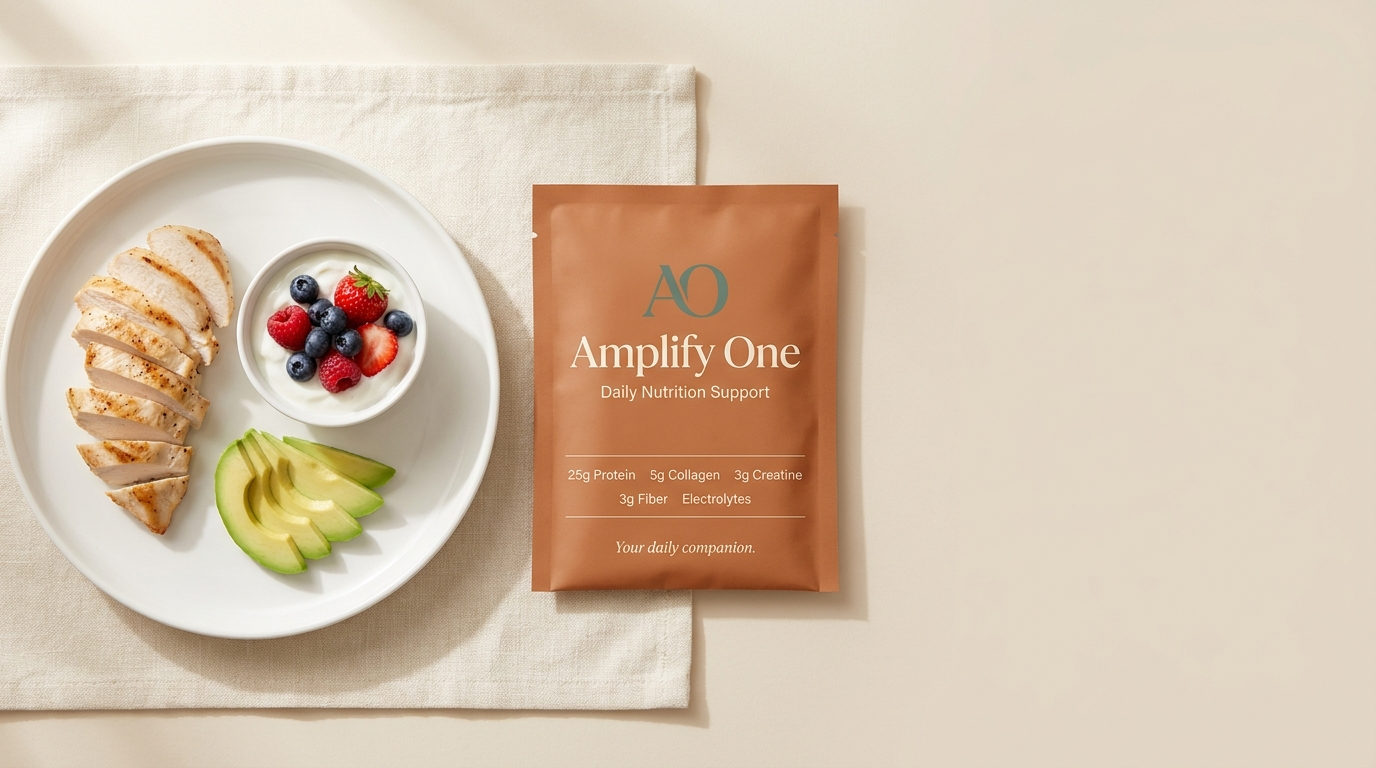
On a GLP-1, the conversation about food changes completely.
If you were used to thinking about food in terms of "what should I eat less of," that question becomes irrelevant pretty quickly. The medication does the "eat less" part for you. The new and harder question becomes: when I do eat, what should it be?
Most GLP-1 users get this wrong. They keep the same eating patterns they had before, just smaller. Same morning bagel and coffee, just less of it. Same processed lunch, just half. Same evening pasta, just a few bites.
The result: nutrient gaps, fatigue, muscle loss, hair shedding, and the predictable side effects we've covered in other articles.
Here's what to actually eat on a GLP-1 based on the research, and a daily framework you can actually follow.
The Three Rules of GLP-1 Nutrition
Before getting into specific foods, here are the three principles that should guide every food decision:
Rule 1: Protein First, Every Meal
When appetite is suppressed, protein has to be the non-negotiable. Research published in Advances in Nutrition recommends 1.2 to 1.6 grams of protein per kilogram of body weight per day during meaningful weight loss to preserve lean mass (1). Most GLP-1 users eat about half that much without intentional effort.
For most adults on a GLP-1, the daily target is 100 to 150 grams of protein. Distributed across 3 to 4 meals or servings, that's 25 to 35 grams per serving.
This is non-negotiable because of how your body responds to inadequate protein during weight loss. Without it, lean mass is sacrificed for fuel, metabolic rate drops, and the weight loss that does happen looks worse on body composition than on the scale.
Rule 2: Nutrient Density Over Volume
When you can only eat half as much food, every bite has to do more work. This means prioritizing foods that pack nutrition into small volumes.
High-nutrient-density foods that should anchor your daily eating:
- Lean proteins: chicken, turkey, fish, lean beef, eggs, Greek yogurt
- Cruciferous and leafy vegetables: broccoli, spinach, kale, cauliflower
- Healthy fats: avocados, olive oil, nuts (in small amounts due to volume)
- Berries: blueberries, raspberries, strawberries (high antioxidant, lower volume than other fruits)
- Legumes (when tolerated): lentils, black beans, chickpeas
Low-nutrient-density foods that take up valuable stomach space:
- Refined breads, pastas, white rice
- Most cereals
- Sugary beverages and energy drinks
- Heavy starches like potatoes (not bad, but they're filling without much protein)
- Crackers and processed snack foods
This doesn't mean you can't ever eat these. It means when your stomach can only hold so much, you choose what fills it more carefully.
Rule 3: Electrolytes With Water, Not Water Alone
Most GLP-1 users are told to drink more water by their doctor or by general internet advice. That's reasonable in principle, but it backfires when you're eating less food.
Food provides background electrolytes (sodium, potassium, magnesium). When food intake drops, electrolyte intake drops with it. Drinking more plain water in this state dilutes the electrolytes you do have, making cramps, headaches, and dizziness worse.
The fix is to drink water with electrolytes, especially in the morning and around exercise. We have a full article on this if you want the deeper science.
Morning: Protein First
For most GLP-1 users, breakfast is the most important meal of the day. Here's why.
Appetite on a GLP-1 typically follows a curve. It's strongest in the morning, gradually decreases throughout the day, and is weakest by evening. Many users describe being able to "eat normally" at breakfast but then losing all appetite by 2 or 3 PM.
This means breakfast is your one reliable opportunity to bank protein, electrolytes, and key nutrients for the day. Skipping it (or replacing it with just coffee) wastes the easiest meal you'll have.
A research-backed breakfast structure:
Target: 25 to 35 grams of protein, plus electrolytes
Practical options:
- 3 eggs (18g protein) + 1 scoop whey isolate in coffee or water (25g) = 43g protein
- 1 cup Greek yogurt (20g) + 1 tablespoon nut butter (4g) + berries (small amount)
- 4 oz grilled chicken (28g) + half avocado (this works as breakfast if you can stomach it)
- Cottage cheese (1/2 cup, 14g) + 1 scoop whey isolate (25g) in a smoothie = 39g
- 1 protein shake (25 to 30g whey) + 1 small handful of nuts
The protein shake approach is the most reliable for GLP-1 users specifically because it requires the least chewing and stomach volume. If solid food in the morning is hard, drink your protein.
Midday: Anchor Meal
Lunch is typically your "easiest" meal volume-wise because appetite is still relatively present. Use this meal to anchor your daily protein and get nutrient-dense vegetables in.
Target: 25 to 30 grams of protein + non-starchy vegetables + small portion of fat
Practical options:
- 4 oz grilled chicken breast + side salad with olive oil + small portion of quinoa or rice
- Salmon or tuna (4 oz) over leafy greens with avocado
- Turkey or chicken wrap (small) + side of vegetables (the wrap matters less than the filling)
- Soup with substantial protein content (chicken and bean soup, beef stew) + small salad
- Greek yogurt bowl (1 cup, 20g) with chicken slices added (15g more)
Avoid making this a heavy carb meal. Pasta, sandwich-heavy meals, and large grain bowls fill you up without providing the protein your body actually needs.
Afternoon: Bridge
Afternoon is when most GLP-1 users start to struggle. Appetite is dropping, food feels less appealing, and many users skip eating entirely.
The problem with skipping the afternoon is that it leaves a large protein gap between lunch and dinner, and most users have a hard time consuming a large dinner because appetite is even lower by then. The result is they fall short on daily protein.
Target: 15 to 25 grams of protein, easy to consume
Practical options:
- 1 protein bar (look for 15 to 20g protein, lower sugar) + small handful of nuts
- 1 hard-boiled egg + a piece of fruit
- Greek yogurt cup (single serving)
- Cottage cheese (1/2 cup) with a small fruit
- 1 scoop whey isolate in water with electrolyte mix
- Tuna packet or chicken salad (small portion)
If you genuinely can't stomach food in the afternoon, a protein shake remains the easiest fallback. A scoop of whey isolate in 8 ounces of water provides 25 grams of protein with minimal stomach volume.
Evening: Quality Over Quantity
Dinner is often the hardest meal for GLP-1 users. Appetite is at its lowest, and many users find they can only eat a few bites of whatever they make.
The temptation is to "skip dinner" entirely, but this leaves you short on both protein and nutrients for the day. The better approach is a small but nutrient-dense meal designed for minimal volume.
Target: 20 to 30 grams of protein, vegetables, minimal starch
Practical options:
- 4 oz lean steak or salmon + a small portion of roasted vegetables
- 3 oz chicken thigh + cauliflower mash + side of greens
- Egg scramble with vegetables and cheese (for those who can't manage heavier proteins at night)
- Small bowl of bone broth with shredded chicken and vegetables (gentle on stomach)
- Tofu or tempeh (4 oz) stir-fried with vegetables (for plant-based eaters)
If you can only manage a few bites of dinner, prioritize the protein portion first. Eat the chicken before the vegetables before the rice. Make sure whatever you do eat is what your body needs most.
What to Avoid
Some foods cause disproportionate problems for GLP-1 users:
1. Greasy or fried foods. GLP-1 medications slow gastric emptying. Adding heavy fats to that combination can cause significant nausea and discomfort. This is one of the most common triggers for GLP-1 side effects.
2. Large meals. Your stomach simply cannot handle the volume it used to. Trying to eat a normal-sized restaurant meal in one sitting often leads to nausea, vomiting, or feeling sick for hours.
3. Alcohol. Two issues: GLP-1 users typically have heightened sensitivity to alcohol (less food to slow absorption, plus medication interactions). Most users find one drink hits them like two or three. Also, alcohol calories displace food calories, worsening nutrient gaps.
4. Sugary drinks and refined sugar. These spike blood glucose, often cause nausea on a GLP-1, and provide no useful nutrition for the calories they contain.
5. Very high-fiber foods all at once. Fiber is good for you, but on a GLP-1 with slowed gastric emptying, large fiber loads can cause significant bloating and discomfort. Build up gradually.
6. Eating too quickly. GLP-1 medications make your stomach feel full faster than it used to. Eating quickly often results in continuing to eat past fullness, which then causes nausea. Slow down dramatically.
A Sample Day
For a 200-pound adult targeting 130 grams of protein:
Morning (around 7 AM)
- 1 scoop whey isolate (25g protein) in water with electrolytes
- 2 scrambled eggs with vegetables (14g)
- Coffee with a splash of milk
- Total: 39g protein
Lunch (around 12 PM)
- 4 oz grilled chicken (28g)
- Side salad with olive oil dressing
- Half avocado
- Total: 28g protein
Afternoon (around 3 PM)
- 1 protein bar (15 to 20g) OR Greek yogurt cup (20g)
- Total: 15 to 20g protein
Evening (around 6 PM)
- 4 oz salmon (25g)
- Steamed broccoli and roasted carrots
- Small portion of quinoa (optional)
- Total: 25g protein
Daily total: 107 to 112g protein
For a 250-pound adult targeting 150g protein, add one more 25g serving (typically a second protein shake in the evening or a larger lunch portion).
For a 150-pound adult targeting 90g protein, drop one serving by 15g (smaller breakfast or skip the afternoon serving).
The Role of Supplements
Even with intentional eating, hitting the protein and nutrient targets through whole food alone is hard when your appetite is suppressed 30 to 40 percent. This is where supplementation isn't optional, it's practical.
The five categories that close the gap:
- Whey protein isolate for daily protein target
- Creatine monohydrate for muscle preservation
- Electrolytes (sodium, potassium, magnesium) for hydration and cramps
- Methylated B-vitamins for energy
- Soluble fiber for digestive comfort
We have a full article on these five supplements and the doses that matter.
This is the foundation of Amplify One. One sachet covers all five categories at clinically meaningful doses. It's not a replacement for food, but a reliable foundation that fills the gaps when food alone can't.
The fix isn't a mystery. It's just inconvenient. Hit your protein. Replace your electrolytes. Take active form B-vitamins. Add creatine. Get enough fiber. Every single day.
Common Mistakes
A few patterns that consistently cause problems:
Mistake 1: Skipping breakfast. Easiest meal of the day, biggest leverage on daily protein. Skipping it is the most common reason GLP-1 users fall short on protein.
Mistake 2: Treating protein as optional. Many users default to whatever sounds appealing rather than building meals around protein. The result is meals that fill stomach volume without providing what the body needs.
Mistake 3: Drinking water without electrolytes. Doctor said "drink more water." Patient drinks gallons of plain water. Cramps and headaches get worse, not better.
Mistake 4: Eating the same way as before, just smaller. This works for total calorie reduction but creates nutrient gaps because your former eating pattern was probably not optimized for high-density nutrition.
Mistake 5: Avoiding all carbs. Some carbs are valuable, especially complex ones (oats, quinoa, sweet potatoes, beans). Going zero-carb on a GLP-1 often worsens fatigue and energy issues without helping weight loss.
Mistake 6: Trying to hit a specific calorie target. On a GLP-1, calorie counting often becomes irrelevant. The medication is already creating the deficit. Focus on protein and nutrient quality, let the calorie math sort itself out.
The Bottom Line
What you eat on a GLP-1 matters more than how much. The medication handles "less." You handle "right."
Three rules:
- Protein first, every meal (25 to 35g per serving, 100 to 150g daily)
- Nutrient density over volume (every bite should do work)
- Electrolytes with water (not water alone)
Front-load your day with protein because appetite is highest in the morning. Use the afternoon as a protein bridge. Make dinner small but high-quality. Avoid the foods that cause disproportionate problems (greasy, alcohol, large volumes).
If you do these things consistently, most of the side effects that GLP-1 users complain about (fatigue, hair shedding, cramps, muscle loss) become significantly less common.
You can't out-medicate inadequate nutrition. The scale will move regardless. What's underneath that number, and how you feel during the journey, is determined by what you eat.
Frequently Asked Questions
Sources
- Cava E, Yeat NC, Mittendorfer B. "Preserving Healthy Muscle during Weight Loss." Advances in Nutrition. 2017;8(3):511-519.
- Jäger R, Kerksick CM, Campbell BI, et al. "International Society of Sports Nutrition Position Stand: protein and exercise." Journal of the International Society of Sports Nutrition. 2017;14:20.
- National Institutes of Health Office of Dietary Supplements. "Magnesium Fact Sheet for Health Professionals."
Daniel Showman
Founder of Amplify One. Writing about GLP-1 nutrition from the research, and from experience.
More articles →